
Tropical Fruit Perfumes: A Juicy Trend You Can’t Ignore
Tropical fruits are having a moment in the fragrance world. In recent years, notes like pineapple, lychee, mango, guava, and even banana have taken center stage—especially in both fine fragrances and body mists. Their juicy, sun-soaked profiles feel instantly appealing to consumers, bringing a burst of freshness and fun.
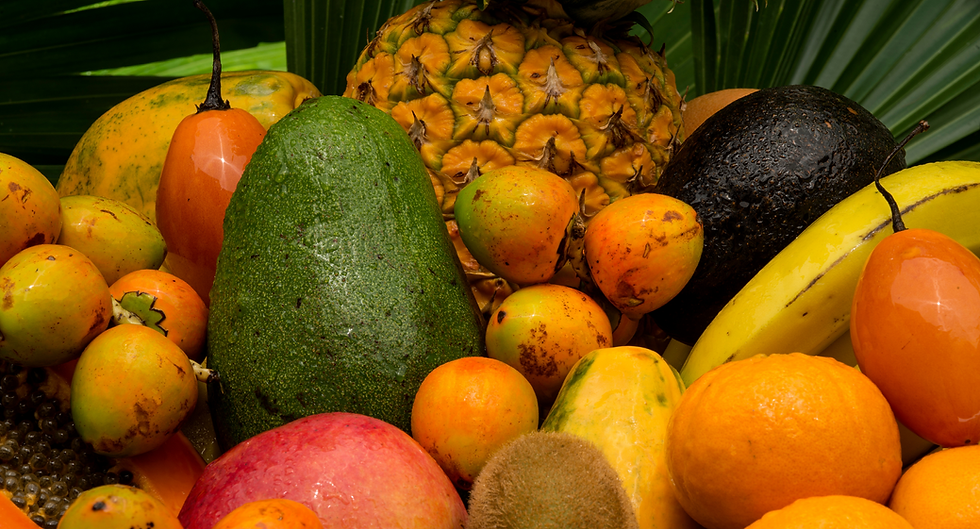
But beyond their crowd-pleasing charm, these fruits also open up exciting possibilities—and real formulation challenges—for perfumers behind the scenes.¹²
1. Guava: The New Star of Tropical Scents

Once overlooked, guava is now stealing the spotlight in tropical fruit perfumes. Its scent is uniquely complex—a creamy, milky softness layered with crisp green freshness (think pear) and just a hint of tart red berry. To recreate this luscious profile, perfumers blend green aldehydes (like hexenal derivatives), juicy fruity esters (such as ethyl butyrate and isoamyl acetate), and smooth lactones like gamma-undecalactone. Delicate floral notes are often added for balance. But guava isn’t the easiest to tame: its high volatility means formulators must rely on fixatives or encapsulation techniques—especially in water-based formats like body mists, where longevity is a constant challenge.³⁴⁵
2. Pineapple and Lychee: Top-Note Powerhouses


Bold, juicy, and instantly recognizable—pineapple and lychee bring a vivid fruitiness that lights up the top of a fragrance. Pineapple’s sunny sharpness is often built with materials like allyl caproate, while lychee’s crisp, refreshing tone comes from esters and 2,3-butanedione derivatives. But their brilliance comes at a price: both notes are highly volatile and prone to oxidation. To keep their scent fresh and stable—especially in high-water formats like body mists—perfumers turn to smart stabilization tools, including antioxidants, pH adjusters, and encapsulation systems.⁶⁷
3. The true crown goes to banana—2025’s most surprising tropical fruit perfumes' star

Banana is making a bold return in tropical-inspired perfumery, offering a lush, nostalgic sweetness balanced by green and creamy nuances. Its olfactory profile blends ripe fruitiness with milky lactonic depth and fresh peel-like brightness.To craft this complex accord, perfumers turn to esters like isoamyl acetate and amyl butyrate, paired with gamma-lactones for creaminess and green aldehydes for lift. Banana’s volatility and tendency to oxidize make it challenging to stabilize, often requiring antioxidants, pH modifiers, or encapsulation—especially in mist formats where quick evaporation can dull its impact.⁸⁹¹⁰¹¹
4. Formulation Considerations in Body Mist Applications
Tropical fruit notes, while appealing, require specific technical considerations for optimal performance:
Volatility Management: High evaporation rates necessitate the use of musks, woods, or ambery materials to anchor fleeting top notes.
Solubility Challenges: Many fruity aroma molecules are poorly water-soluble and require co-solvents or specialized solubilizers for stable dispersion in aqueous systems.
Photostability Concerns: Fruit-based accords—especially those with citrus or tropical profiles—may degrade with UV exposure. This calls for appropriate packaging or the use of UV absorbers to ensure olfactive consistency.
5. Strategic Pairings for Longevity and Complexity


To improve retention and dimensionality, tropical fruit notes are often paired with complementary olfactive families:
Guava + Freesia: Enhances creamy-green floral depth.
Pineapple + Ambroxan: Boosts diffusion and base longevity.
Lychee + Peony or Rose Oxide: Introduces a fresh, luminous floral overlay.
Banana + Ylang-Ylang or Vanilla: Adds sophistication while softening overly sweet facets.
The tropical fruit trend—led by guava, lychee, pineapple, and banana—is more than a fleeting aesthetic. It reflects evolving global fragrance preferences and introduces new layers of technical complexity. Successful implementation depends on thoughtful material selection, stabilization strategies, and a structured approach to volatility and solubility challenges—ensuring that the scent experience remains vibrant, stable, and sensorially compelling across formats.
Footnotes
PubMed: Volatile compounds in tropical fruits and their aromatic contribution, DOI:10.1016/j.foodres.2008.01.015
ScienceDirect: Esters and lactones as dominant contributors in tropical fruit aroma
ResearchGate: Profile changes in banana and guava volatiles during low temperature drying
Fragrantica: Tropical Trends in Modern Perfumery: Guava
NCBI: Encapsulation technologies for volatile delivery in perfumery and cosmetics


Comments